
Does Tummy Fat Freezing Reduce Visceral Fat or Only Subcutaneous Fat?
Tummy fat freezing can help with some abdominal fat, but it does not reduce visceral fat. It is designed for localized, pinchable fat just under the skin, which is called subcutaneous fat. If your stomach feels firm, projects more from deeper inside, or your main goal is broad weight loss, a different path is usually more realistic. You can review our broader body sculpting options here.
What is the short answer if your goal is a flatter stomach?
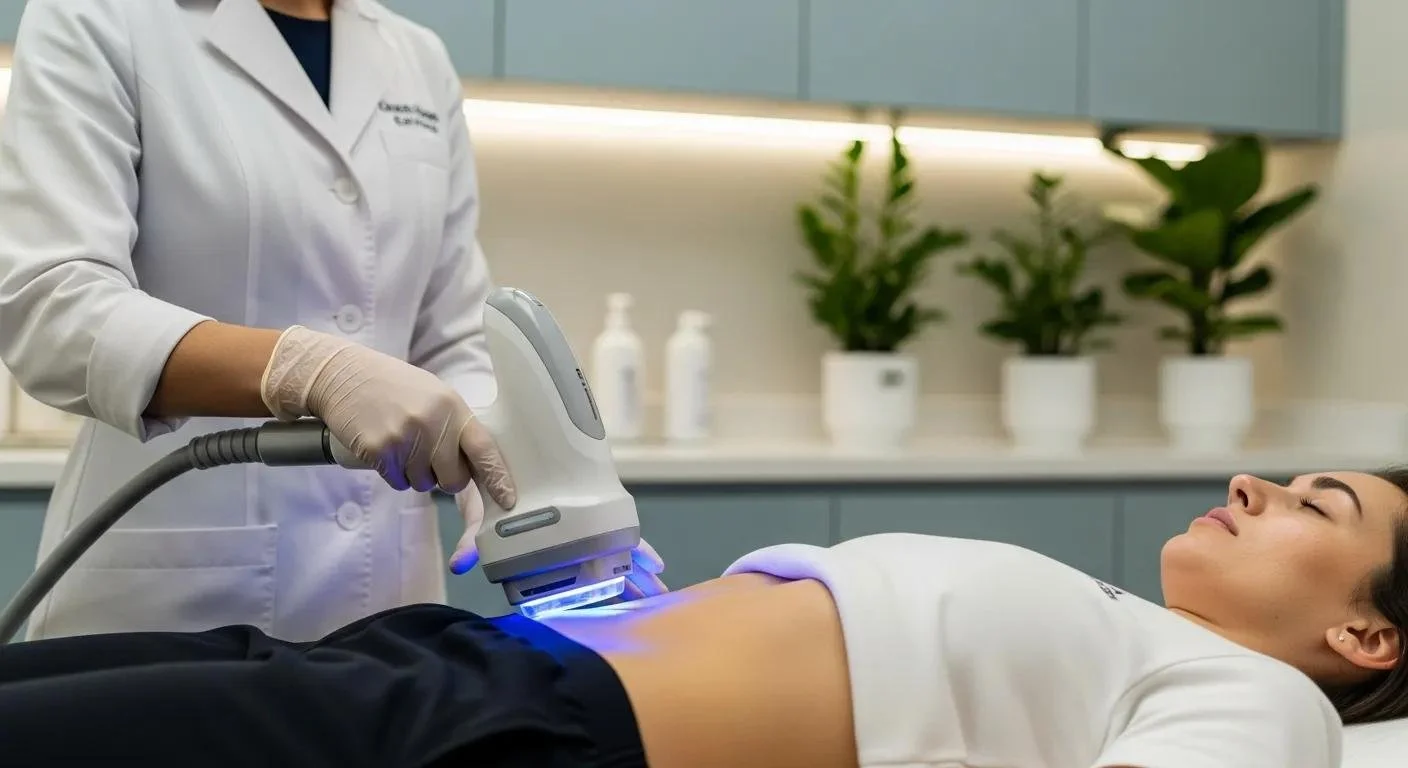
The short answer is that tummy fat freezing can reduce subcutaneous abdominal fat, but it does not treat visceral fat. FDA guidance on cryolipolysis describes the process as drawing localized fat into an applicator and cooling it so the body can naturally eliminate the treated fat cells over a period of about two to three months.
That difference matters because “belly fat” is not one thing. Some abdominal fullness comes from the outer layer you can pinch, and some comes from deeper fat around the organs. Only the outer, pinchable layer is the kind fat freezing is designed to target.
What is the difference between visceral fat and subcutaneous fat?
Subcutaneous fat is the layer just under your skin. It is the softer, pinchable fat you can usually grab with your fingers, and it often collects around the belly, hips, thighs, and arms. Cleveland Clinic describes subcutaneous fat as the type you can grab and pinch between your fingers.
Visceral fat is different. It sits deeper inside the abdomen and wraps around internal organs, which is why it usually cannot be seen or felt directly the same way. Cleveland Clinic explains that visceral fat lines your abdominal walls, surrounds organs, and that belly fat includes both visceral and subcutaneous fat.
Why does tummy fat freezing only target the outer fat layer?
Tummy fat freezing only works on the outer fat layer because the treatment is built around grabbing a surface bulge into the applicator. The FDA describes cryolipolysis as treatment for a targeted area of pinchable fat, which is exactly why it fits subcutaneous fat and not deeper abdominal fat.
That is also why good candidacy matters so much. Cleveland Clinic describes fat freezing as a nonsurgical procedure for localized fat deposits or bulges that do not respond to diet and exercise, and not a treatment intended for obesity.
How can you tell which type of belly fat may be driving your shape?
You usually cannot know with perfect certainty just by looking, but you can often make a better first guess by paying attention to feel, distribution, and the kind of result you are hoping for. The goal is not to self-diagnose. It is to avoid expecting a surface treatment to fix a deeper problem.
| What you notice | What it may suggest | Can tummy fat freezing help? | Better next step |
|---|---|---|---|
| A soft roll or bulge you can pinch at the lower abdomen or sides | Mostly subcutaneous fat | Often, yes, if the area is localized and you are otherwise a good candidate | Body contouring consultation |
| A firm, rounded stomach that is hard to pinch | More visceral or deeper abdominal fullness | Usually no | Focus on overall weight and health habits first |
| A small pinchable pocket plus mild looseness | A mix of fat and skin laxity | Sometimes, but one treatment may not solve both concerns | Ask whether a combined plan makes more sense |
| Hanging or crepey abdominal skin after major weight change | More skin than fat | Usually not enough on its own | Discuss a different treatment path |
| A visible bulge near a known hernia or weak abdominal area | Structural issue rather than simple fat | No, not without proper medical guidance | Get the area assessed before considering treatment |
If your concern is clearly a soft, localized abdominal pocket, you can learn more about our cryo sculpting approach here.
When is tummy fat freezing still worth considering for the abdomen?
Tummy fat freezing is usually most worth considering when your weight is fairly stable, the area is clearly pinchable, and your goal is contour improvement rather than major overall size change. People usually feel better about treatment when they are solving one visible contour problem, not hoping to erase every cause of abdominal fullness.
This quick checklist can help you judge whether the conversation is worth having.
Your weight has been relatively stable.
You can pinch at least part of the abdominal area that bothers you.
Your main concern is one stubborn pocket, not your whole midsection.
You want shape refinement, not major weight loss.
You understand that changes are gradual, not instant.
You do not have a known cold-sensitivity condition that would make treatment unsafe.
Significant loose skin is not the main problem, or you understand that a different plan may be more realistic.

What does this look like in real life?
Real decisions usually make more sense through examples than definitions.
Example 1: Someone is close to a stable weight, eats well, and still has a soft lower-abdomen pocket that folds easily when sitting. That kind of abdominal fullness is more likely to be the type tummy fat freezing can help, because it is surface-level and localized.
Example 2: Someone else feels like their whole stomach pushes forward, the midsection feels firm, and they also want the scale to move down in a meaningful way. In that situation, tummy fat freezing usually will not address the main issue, because the deeper fullness is more consistent with visceral fat or broad weight-related change.
You can also review real body sculpting before-and-after photos here.
What common mistakes and red flags should you watch for?
The biggest mistake is treating all belly fat as if it responds to the same treatment. It does not. A surface treatment can help the outer fat layer, but it will not remove visceral fat or replace the work required for broader weight change.
Another mistake is confusing a harder, deeper belly with a pinchable fat pocket. Cleveland Clinic notes that you cannot see or feel visceral fat directly the same way you can with subcutaneous fat, which is one reason a professional assessment matters when the fit is not obvious.
Red flags matter too. Be cautious if you are promised major weight loss, told every stomach responds the same way, or not screened for safety. FDA guidance on cryolipolysis and body contouring devices explains that the treatment is not suitable for individuals with specific cold-related conditions and outlines risks that can include temporary effects like redness or numbness as well as rare complications such as paradoxical adipose hyperplasia and hernia.
Frequently asked questions about tummy fat freezing and visceral fat
-
No. Tummy fat freezing is designed for pinchable subcutaneous fat, not deeper visceral fat around the organs.
-
That often means more than one factor is contributing to your shape. You may have some pinchable subcutaneous fat on top of deeper abdominal fullness, along with posture, skin laxity, or other body-structure factors.
-
It can still help the outer layer if there is a clear, localized pocket to treat. It just may not fully change the deeper fullness that bothers you most.
-
Visceral fat is usually addressed through the same overall habits that support weight loss and total fat reduction. Cleveland Clinic notes that staying active, managing what you eat, sleeping well, and reducing stress are part of that process.
Ready to find out whether your abdominal fullness is actually the kind tummy fat freezing can treat?
If you want a realistic opinion on whether your concern is subcutaneous fat, start with our body sculpting overview and request a consultation from there.